Program Details
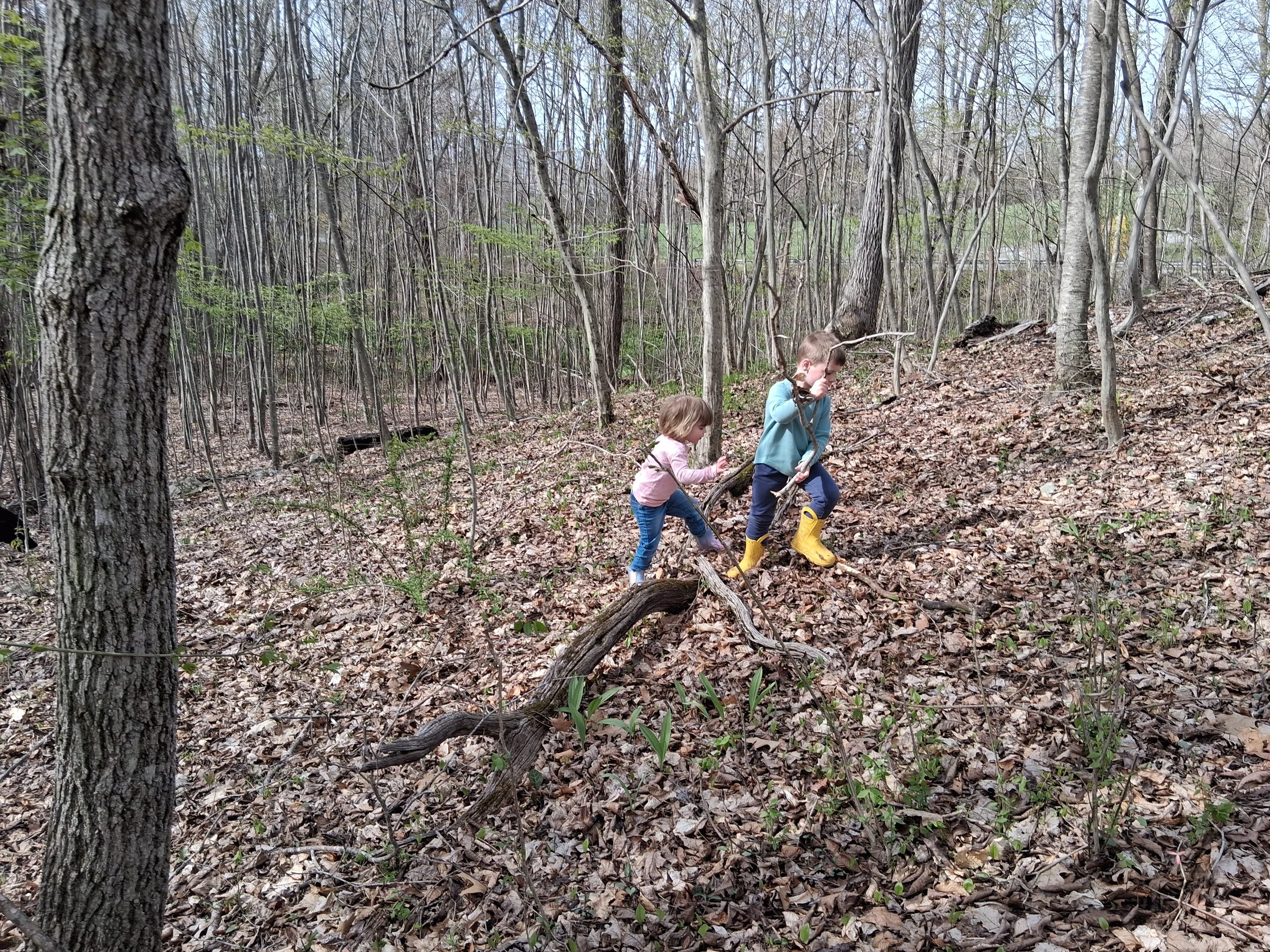
Lyon Acres is a nature-based early years preschool program on twenty wooded acres in Willington, Connecticut. We offer two sessions daily, Monday through Thursday, August through June — each intentionally small, each shaped by the season outside the door.
Two enrolled children join our family for a total of six children per session. This is not a classroom. It is a family's life, opened up.
THE LAND
Before the program, there is the place.
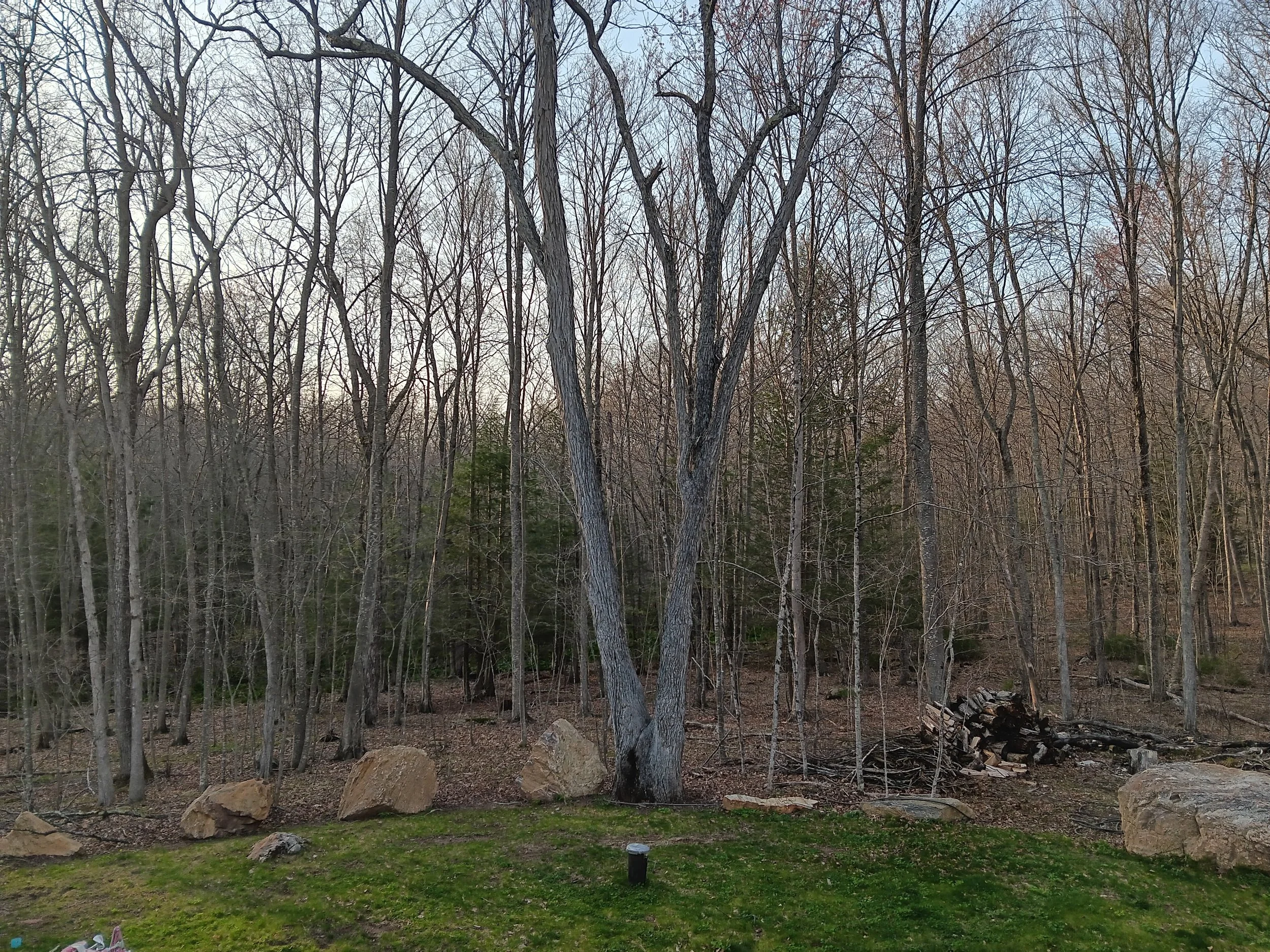
Twenty acres in Willington hold more than trails. There are open front and back yards where children run freely and climb the large rocks that have always been here. A wildflower meadow of native grasses changes week by week — bare and sleeping in winter, buzzing and tangled in summer, bright with seed heads in autumn. Wooded trails wind through the property with varied terrain, fallen logs, and the kind of quiet that is harder to find every year. A seasonal stream runs through the wetlands at the edge of the property — frozen in January, full and rushing in April, nearly hidden by July. And at the center of our outdoor life, a nature circle of wooden stumps where we gather, observe, and meet together outside.
This land is not a backdrop. It is the curriculum.
THE HOME
When children come inside at Lyon Acres, they come inside a home.
Our open-concept living space — kitchen, dining room, and living room flowing together beneath cathedral ceilings and floor to ceiling windows — brings the outside in even when we are indoors. The land is always visible. The light changes with the clouds. Children who have just come in from the wildflower meadow or the wooded trails settle into a space that feels continuous with where they have been.
A large family table anchors the kitchen and dining space — where snack is prepared together, where food is eaten side by side, where the practical work of the day happens in a real kitchen rather than a program room. A sectional sofa and a cozy rug hold the reading corner, floor to ceiling bookshelves lining the walls beside them. In winter the fireplace is lit. Tea is poured. A book is opened.
The Woodland Discovery Room is our dedicated nature study space — a room set apart from the main living areas and devoted entirely to the program's nature work. Its character and configuration shift with both the session and the season, and it is described in full further down this page.
This is not a facility. It is a home — and that distinction is felt immediately by every child who walks through the door.
MORNING SESSION - Early Discovery Preschool
8:00 to 10:55am · Monday through Thursday · Ages 2½ to 4
The morning begins slowly. Each child is greeted by name at the door — buenos días — and given time to arrive fully before anything begins. Boots go into their personal bin. The day gathers itself quietly.
Before heading outside we pause together briefly — a single seasonal noticing prompt to orient small eyes before they go. I wonder if the spider's web survived the rain. Let's see if the first seeds have pushed through in the garden bed. One sentence. Then we go.
Outside, whatever the weather.
An unhurried stretch outdoors — open yards for running, large climbing rocks, a wildflower meadow alive with what each season brings, wooded trails through the woods, and our nature circle where we gather together outside. We go out in rain, in cold, in mud, and in the full heat of a June morning, because the land always has something to offer. Ninety minutes of largely child-led outdoor time is the heart of the morning — protected, unhurried, and never shortened.
Gentle conversational Spanish is woven through the morning from arrival to goodbye — greetings, names for what we find outside, simple phrases repeated in context. Mira. Qué es esto. Rojo. Buenos días. Not a lesson. A living language used the way language is actually learned — in relationship, in repetition, in the texture of an ordinary morning.
Coming inside, children move through the open living space — floor to ceiling windows holding the land in view, the familiar smell of home, the shift from outdoor air to indoor warmth that becomes its own seasonal ritual. Some mornings the Woodland Discovery Room calls children directly — blocks, open-ended building, sensory play, and the art prints on the walls that reward a slow look. Other mornings children settle at the family table or the reading corner while the snack comes together.
Then we gather at the large family table.
A seasonal, multi-component snack prepared together — small hands washing, slicing, arranging, pouring. In autumn it might be apple slices and warm cider. In winter, bread and butter with a pot of herbal tea. In spring, the first radishes from the garden with soft cheese. In summer, whatever the garden offers that morning. The snack is never an interruption to the program. It is the program — practical life, community, and seasonal connection happening at once.
Tea is poured. The table settles.
Then to the reading corner — the sectional, the cozy rug, the floor to ceiling bookshelves. A living book read slowly, a picture book chosen for its richness and its illustrations, turned outward so small eyes can follow. Then one short poem read twice. No discussion required. Just beautiful words in a warm room.
Music with Mimi joins the morning most weeks. A beloved family member with twenty years of pre-k teaching experience specializing in music with twos and threes, Mimi brings songs, rhythm, seasonal movement, and fingerplays that children carry home in their bodies long after the morning ends. On music days she arrives at 10:00 and the woodland room time gives way to singing — a natural exchange that children look forward to from early in the week.
Then the goodbye — the same phrase, the same gesture, every single day — and the morning is done.
AFTERNOON SESSION - Deeper Exploration Preschool
1:00 to 3:55pm · Monday through Thursday · Ages 3½ to 6
The afternoon has an intentional, purposeful character. Older children arrive at 1:00 and the gathering is unhurried — each child greeted by name in Spanish and in English, time given to arrive fully before anything begins. Boots into their personal bin. The day gathers itself.
The outdoor intention for the afternoon is specific. Today we're checking the garden to see what's ready. We're going to look closely at the bark on the old oak and draw what we find. The stream has been rising — let's see how far. A loose mission, not a lesson. Then we go outside.
Outside, whatever the weather.
A purposeful stretch outdoors — wooded trails with varied terrain, the wildflower meadow for close seasonal observation, the wetlands and seasonal stream that change dramatically across the year, large climbing rocks, and our nature circle for tending, noticing, and gathering together. Ninety minutes of outdoor time is the anchor of the afternoon, shaped by what the season asks of us.
In autumn we harvest and put the garden to bed — small hands pulling the last of the season's growth, saving seeds, preparing the beds for winter. In winter we track, observe, and study the bare and honest landscape — ice formations on the stream, bird activity, the architecture of trees without their leaves. In spring we plant, monitor, and tend — seeds tracked across weeks with genuine investment in what happens next. In summer the wetlands and stream become the center of the afternoon's outdoor life — water, mud, full sensory immersion in the land at its most alive.
Gentle conversational Spanish runs through the afternoon — named in the outdoor work, counted in the kitchen, woven into the texture of the hours. Mira. Qué es esto. Vamos afuera. Bien hecho. Not a lesson. A living language, used the way language is actually learned — in relationship, in repetition, in the ordinary moments of the day.
Coming inside, children move through the open living space — floor to ceiling windows holding the land in view, the light of the afternoon coming through at its particular angle depending on the season. Some afternoons the Woodland Discovery Room holds the transition — loose parts in trays, nature collections gathered across the weeks, seasonal making materials, space for projects that develop over time. Other afternoons children settle at the large family table or the reading corner while the snack comes together.
Then we gather around what has been made.
On Memere's days, what we gather around is something made from scratch with small hands under real guidance. Memere is a beloved family member with fifteen years of experience managing a daycare food program and teaching cooking skills to young people. She joins our afternoon session most weeks and brings genuine kitchen work to the family table — bread sliced and buttered, herbs washed and chopped, simple dishes assembled with real technique scaled beautifully for small hands. Children who cook with Memere are not pretending. They are doing real work that produces real food, eaten together at the table where it was made.
On regular afternoons the snack preparation is simpler but no less intentional — children fully involved, seasonal components, something prepared rather than simply opened.
Tea is poured at the large family table. The afternoon settles.
Then to the reading corner — the sectional, the cozy rug, the floor to ceiling bookshelves, and in winter the fireplace lit beside us. Here we read across sessions. A chapter continued from earlier in the week, anticipated since Monday, resumed on Wednesday. Children who return to a continuing story develop something essential — sustained attention, narrative memory, and the particular pleasure of a world you can re-enter. One poem closes the living book, read twice, in no hurry at all.
Then the goodbye — nos vemos — and the afternoon is done.
THE WOODLAND DISCOVERY ROOM
The Woodland Discovery Room is Lyon Acres' dedicated space for nature study — set apart from the main living areas and devoted entirely to the program's work with the natural world.
It is not the only indoor space children use. The open kitchen, the family table, the reading corner with its floor to ceiling bookshelves, the sectional by the fireplace — all of these are part of the daily rhythm. But the Woodland Discovery Room is where the nature work lives most deeply, and it changes with both the session and the season.
For the youngest morning children the room is anchored by blocks, open-ended building materials, and sensory elements that shift across the year. Beautiful art prints hang on the walls — chosen to reward looking and rotated with the seasons. A child who walks past the same print for six weeks begins to notice things they didn't see at first. This is picture study the way Charlotte Mason intended it — not instruction, but living with beautiful things.
For the older afternoon children the room reconfigures — loose parts in trays and open containers, nature collections gathered across the weeks of the year, seasonal making materials, and space for projects that develop over time. A nature mandala begun on Monday might continue Wednesday. A loose parts construction might be photographed and returned to. Older children can sustain a project and the room is designed to hold that continuity.
The room itself changes with the seasons. The autumn room fills with what children bring in from outside — acorns, seed pods, pressed leaves, bark rubbings. The winter room becomes quieter and cozier. The spring room holds seeds on the sill and the first green things coming in from outside. The summer room is quieter than any other season, because summer at Lyon Acres happens almost entirely outdoors.
GEAR AND CLOTHING
Lyon Acres goes outside in all weather. Each enrolled child keeps a permanent gear bin at Lyon Acres — a labeled space that belongs to them and holds what they need to be outside comfortably in every season.
Families are asked to provide and maintain:
Waterproof rain jacket
Rain pants or mud pants
Rubber boots — sized generously, as children's feet grow
A warm layer for autumn and winter sessions
A spare full change of clothes including underwear and socks
A sun hat for summer sessions
At each seasonal transition — September, December, March — we send a gentle reminder to check sizing and refresh what's needed. A child who arrives without appropriate gear cannot participate fully in outdoor time, which is the heart of both sessions. Keeping gear on site removes that possibility entirely.
THE PROGRAM YEAR
Lyon Acres runs Monday through Thursday, August through June. July is closed entirely — our family's month, protected.
We observe all federal holidays, the Wednesday before Thanksgiving, and close between Christmas and New Year's Day. The full program calendar for each year is shared with enrolled families each August before the program begins.
Tuition is $1,200 per child per month, consistent August through June regardless of individual holidays or planned closures. An enrollment deposit equal to one month's tuition holds your child's spot and applies to the final month of the program year. Sixty days written notice is required to exit the program.
Every enrollment begins with a tour. It is the best way for your family to experience the land, meet us, and know whether Lyon Acres feels right. We hold spots for families who are ready to commit — to the year, to the philosophy, and to the place.